

Understanding what is happening to our bodies during pregnancy and postpartum can help explain so many of the problems women encounter during these phases of life! However, we tend to focus on mama during pregnancy and focus on baby after delivery – and don’t get me wrong, of course the baby needs a ton of attention! But YOU need attention too, your body goes through a lot, and you need to HEAL so that you can give your baby all the attention he/she needs.
Let’s back up a little bit and start with what happens to the pelvic floor during pregnancy, labor, and delivery. During pregnancy, the body endures SO many changes, both hormonal and physical. These changes are vital for the growth and development of your baby.
Several hormones contribute to the increase in laxity of the ligaments surrounding the pelvis. This allows the joints of the pelvis to open and “loosen” so that there is room for the baby to grow and to be delivered. In response, the muscles have an increased responsibility to stabilize the joints, which contributes to the pain in the front and back of the pelvis many women experience.
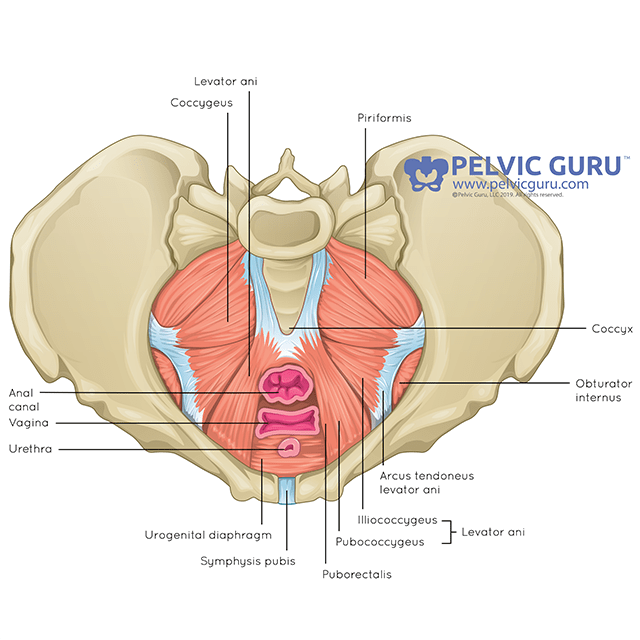
There is also constant and increasing pressure placed on the pelvic floor from the baby. This makes those muscles have to work pretty hard, and if they aren’t functioning optimally to begin with, you may see symptoms like urinary incontinence or pain with intercourse during pregnancy.
This is why it DOES NOT MATTER whether you deliver via cesarean or vaginally – all of this happens no matter how your delivery goes. So, your pelvic floor is impacted either way.
So on to delivery. If you have a vaginal delivery, the cervix dilates and the muscles will stretch to the distance needed to allow your baby out of the vaginal canal. We have awesome hormones that help us out here! In many cases, women may have mild tearing at the perineum – the area between the vagina and the rectum – due to this high intensity stretch. Some women have more severe cases of tearing than others, and some women may have an episiotomy performed, where the tissue is cut by the physician or midwife instead of naturally tearing. Episiotomies have become less common as it has not been shown to reduce the severity of a tear but still may be required in certain scenarios.
So, what exactly is tearing? Part of the muscles and connective tissue of your pelvic floor. Depending on how severe the tear was and where it occurred will determine the need for stitches. With any tear, especially one that requires intervention like stitches, there will be scar tissue. Scar tissue is a good part of the healing process, but sometimes it can cause some problems like limiting the mobility of our muscles and connective tissues.
Where else do we see scar tissue? C-sections. A c-section is a major abdominal surgery! The abdominal muscles are very much so related to our pelvic floor muscle function, and while they are healing, the pelvic floor then takes on a lot of the responsibility of our core.
If the muscles and surrounding tissues cannot move well due to scar tissue, our function is impacted (whether at the abdomen or at the pelvic floor). Muscles may spasm as a protective mechanism or become weak overtime due to the inability to move appropriately. This is where we start to see symptoms of pelvic pain, incontinence, abdominal pain, pelvic organ prolapse, or other urinary or bowel dysfunction.
This information can all sound a little overwhelming and scary at times. However, it is important to understand what your body endures, so you can be proactive in the healing process – knowledge is power right?? The great thing is that these conditions are treatable – even if you had your last baby over 20 years ago!
I wanted to lay out the foundation today, but in my next post, we’ll talk about restoring your pelvic floor postpartum and how to promote optimal healing. And always make sure to comment or send a message through the contact page with any questions!
Onward & Upward,
Allison
 Well + Woman