Are My Abs Torn?? The Truth About Diastasis Rectus Abdominis

Diastasis rectus abdominis (or DRA) is a condition that occurs when the tissue between the “6-pack” muscle (the rectus abdominis) thins out due to an increase in abdominal pressure. This increase in pressure can be from a pregnancy, poor breathing strategies, heavy weight lifting with poor strategies, or increased visceral or abdominal fat. 

This separation can look different person to person – for some it may just be at the belly button, others it may be above or below the belly button, and others it may be the entire length of the abdominal wall. People will also experience different widths and depths of their diastasis. 
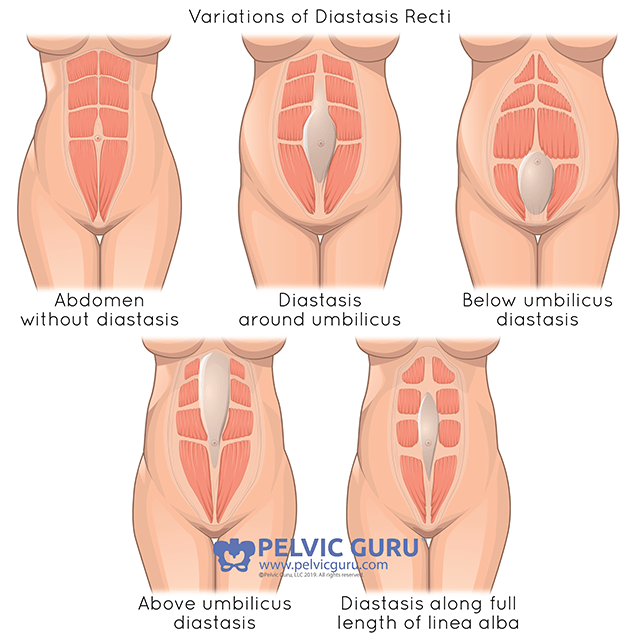
Permission to use by Pelvic Guru, LLC

The great news is that DRA can be treated, and you can get back to doing what you love with the proper guidance! 

There are A LOT of myths surrounding diastasis, which leads to unnecessary hopelessness. So let’s bust some of those myths, shall we?? 

Myth #1: My abdominal tissue is torn! 

Nope! With a diastasis, the tissue is not torn, just stretched out and thinned.The protrusion or depression that some people will see with a diastasis is due to improper activation of the abdominal muscles and poor support of the abdominal wall – not because there has been a tear in the muscle or any of the surround tissues! 

This is GREAT news because abdominal muscle can be retrained and strengthened, which is why this condition is treatable!

Myth #2: I need to get the width of my diastasis back to normal. 

Actually, you don’t! Research has shown that the width of the diastasis is not indicative of how the abdominal muscles are functioning – crazy right?? However, the DEPTH of the diastasis does provide indicators of function. 

Studies have shown that if a diastasis is shallow, the abdominal muscles are supporting the abdominal wall appropriately, even if there are still several finger widths of separation between the rectus abdominis muscle. 

If the diastasis has significant depth to it, those deep core muscles (this includes your pelvic floor!) are not supporting your body appropriately and may be weak, tight, and/or poorly coordinated. 

Most people do want the width of their diastasis to improve, and for some people it will, others it will not. BUT, what is important to note is that even if the width stays the same, as long as the diastasis is shallow and the depth of it is addressed, the muscles are working appropriately to support your abdominal wall and trunk. 

Myth #3: I should avoid all core exercises because it will make my diastasis worse. 

NO, NO, and NO. 

The key is not avoiding the exercise; it is making sure your body is supporting you appropriately. 

This means making sure your deep core muscles are activating well and that you are using good breathing and pressure management strategies so that your abdominal wall is fully supported. 

Some basic principles to start with when adding core exercises back into your exercise regime are: 

  • Avoid breath holding. For most people, exhaling on exertion is easiest. 
  • Perform exercises with slow, controlled movement. Do not rush. 
  • If you start feeling symptomatic, stop. This is your body telling you that this exercise may be too much too soon. You’ll get there, just give your body time where it needs it! 
  • Keep your core engaged to protect your spine and stabilize your pelvis 

This is why seeing a pelvic floor PT is so important when returning to exercise postpartum or with a diastasis in general. We can assess your diastasis, determine how well your abdominal wall is being supported, and provide you with the strategies you need to safely exercise! 

Onward & Upward, 

Allison

Restore Your Pelvic Floor

Whether you had your baby yesterday or 40 years ago, you are postpartum! And it is never too late to improve your pelvic floor muscle function. 

To many people’s surprise, restoring your pelvic floor postpartum does not revolve around kegals! Pelvic floor strengthening is important, but it is far from the only component, not to mention strengthening the pelvic floor involves much more than kegals anyways. 

After a baby is born vaginally, it takes about 6 weeks for your vaginal tissue to heal. It is important to limit your activity to only necessary activities during your first 2-3 weeks postpartum. Around week 3-4, depending on how you are feeling, you may be able to start back to gentle, low impact exercise like walking or yoga. It is important to ease yourself back into exercise, pushing your body past its limits can cause more harm than good. 

If you had a c-section, the abdominal scar will take a little longer to heal. It is best to limit activity until 6-8 weeks postpartum to allow for full scar tissue development and healing. Then, gradually increase your exercise – starting with low intensity and building from there.

There are certain symptoms you want to watch for when returning to exercise postpartum including:

  • Pelvic, vaginal, or abdominal pain
  • Urinary incontinence 
  • Heaviness/pressure in the vaginal area 

If you experience these symptoms, you may be doing too much too soon, and you would definitely benefit from seeing a pelvic floor physical therapist to address the root cause of the dysfunction and help you recover. 

The progression to returning to exercise and activities of daily living will vary from person to person. The most important thing is to listen to your body and what it is ready for. 

We want to restore the function of the muscles and connective tissue found in the entire trunk – because they are all affected by pregnancy and delivery! Like I mentioned earlier, we don’t want to only strengthen – muscles need to lengthen just as much as they need to contract, that’s how we have dynamic movement! Note that lengthening does not mean weak; it just means that the tissues can move through their full range of motion efficiently. 

A few of my favorite muscle lengthening/mobility exercises are: 

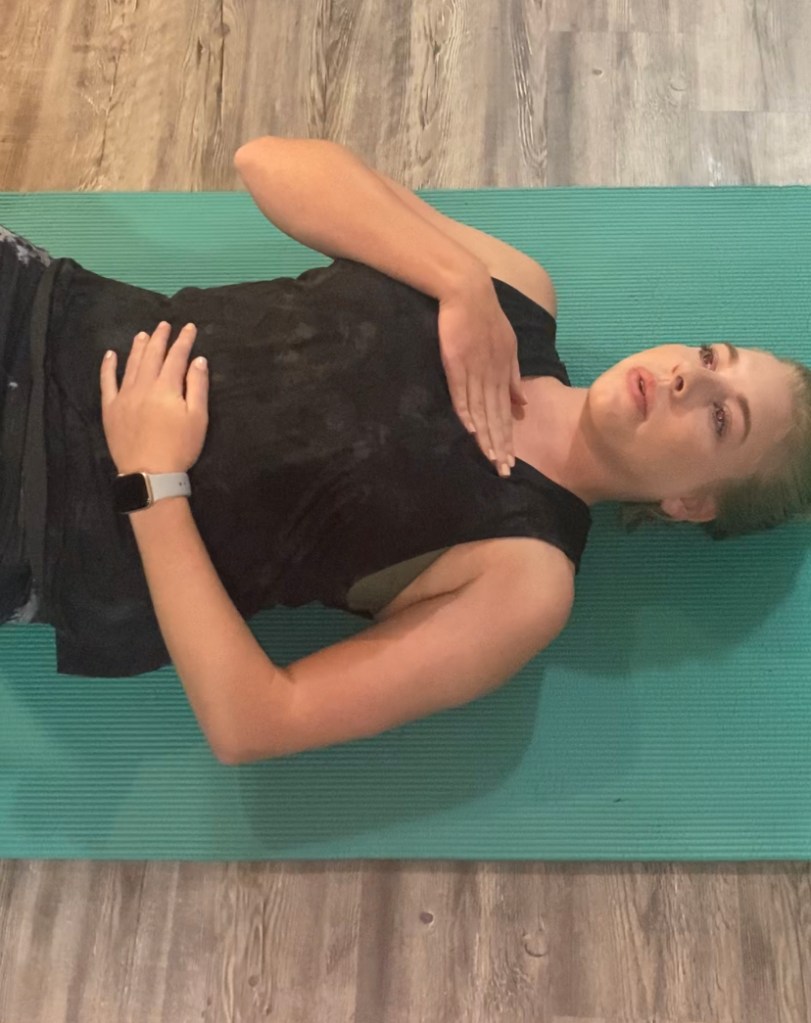
  • Diaphragmatic breathing: sitting or lying down → place one hand on your chest and the other on your stomach → inhale and allow only the hand on your belly to rise, keep the one on your chest still → exhale and let your abdomen relax
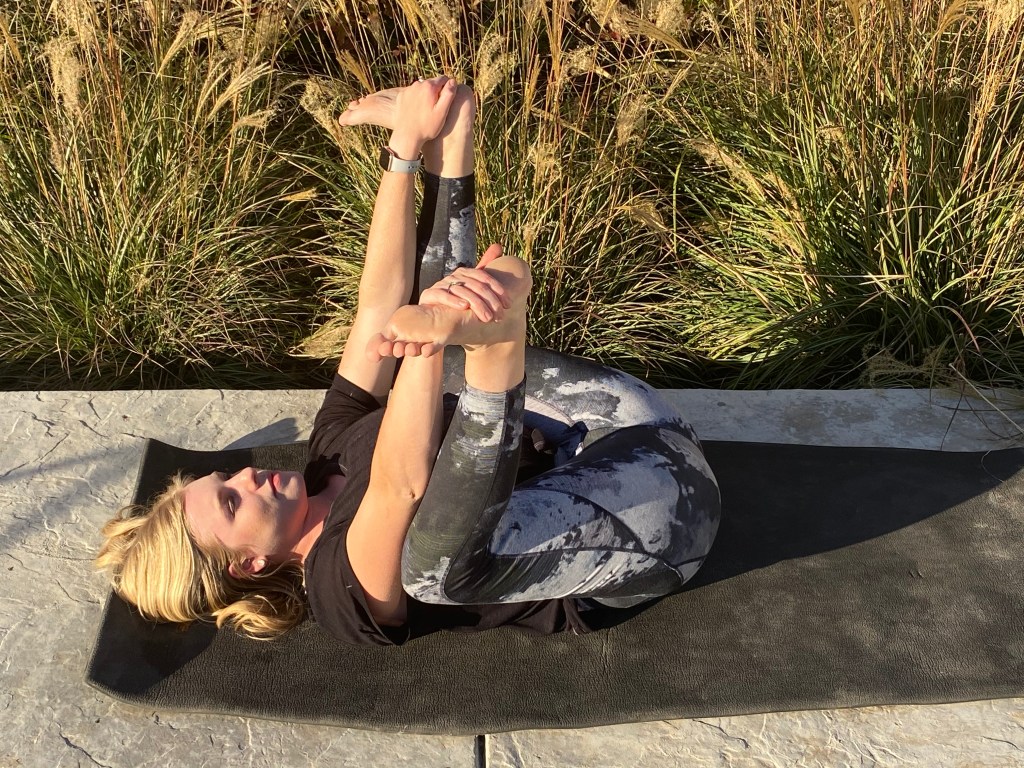
  • Happy baby pose: lie down on your back → bend your knees towards your chest → grab the bottoms of your feet with each hand → hold this position while breathing slowly and deeply (modify with 1 leg at a time if needed!) 
  • Cat/cow: start on all fours → inhale and round out your spine from your head to your tailbone → exhale and allow your abdomen to drop and head to look up

Do these exercises 2-3x/day for 1 minute each. 

Now of course, we need to strengthen our bodies too! So here are three gentle strengthening exercises that will target your core and pelvic floor: 

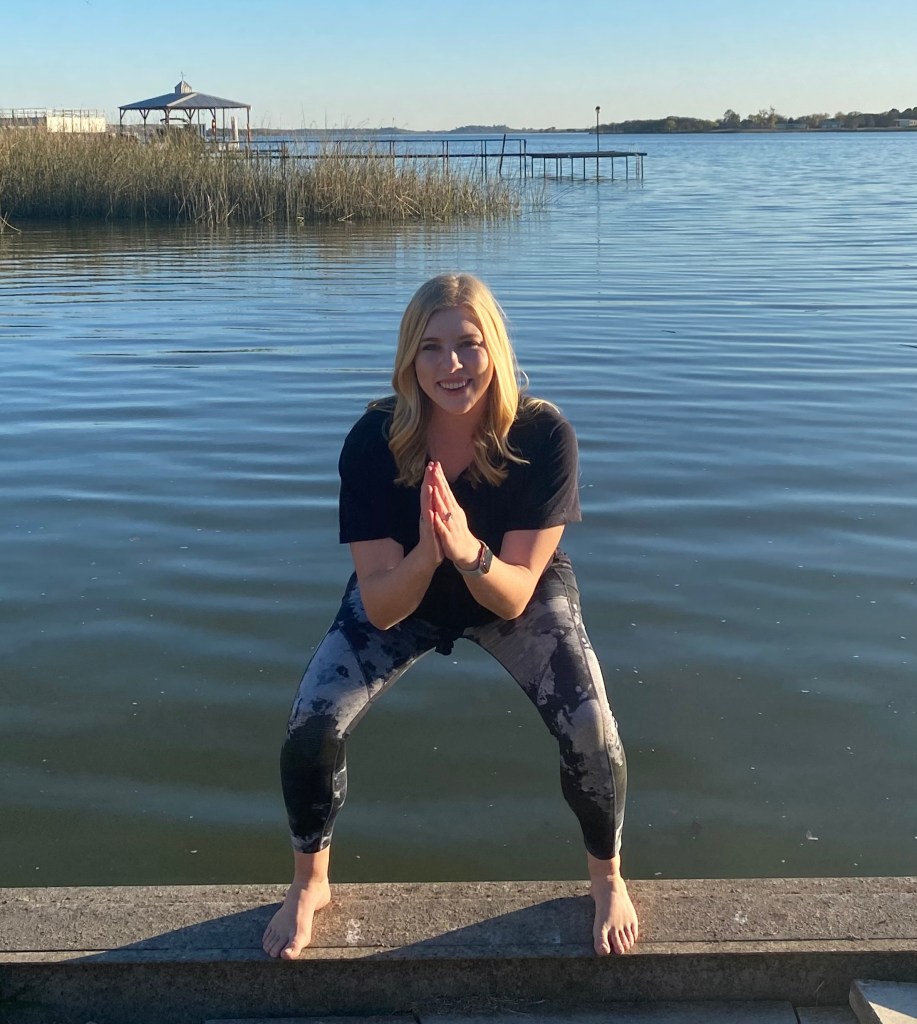
  • Squats: start standing with feet just past hip width apart → push your buttock back and squat to about 60-90 degrees (not deep) → return to stand 
  • Bird dog: start on all fours → gently draw your belly button to your spine → raise one arm and the opposite leg, keeping your hips level → return to starting position → repeat on the opposite sides 
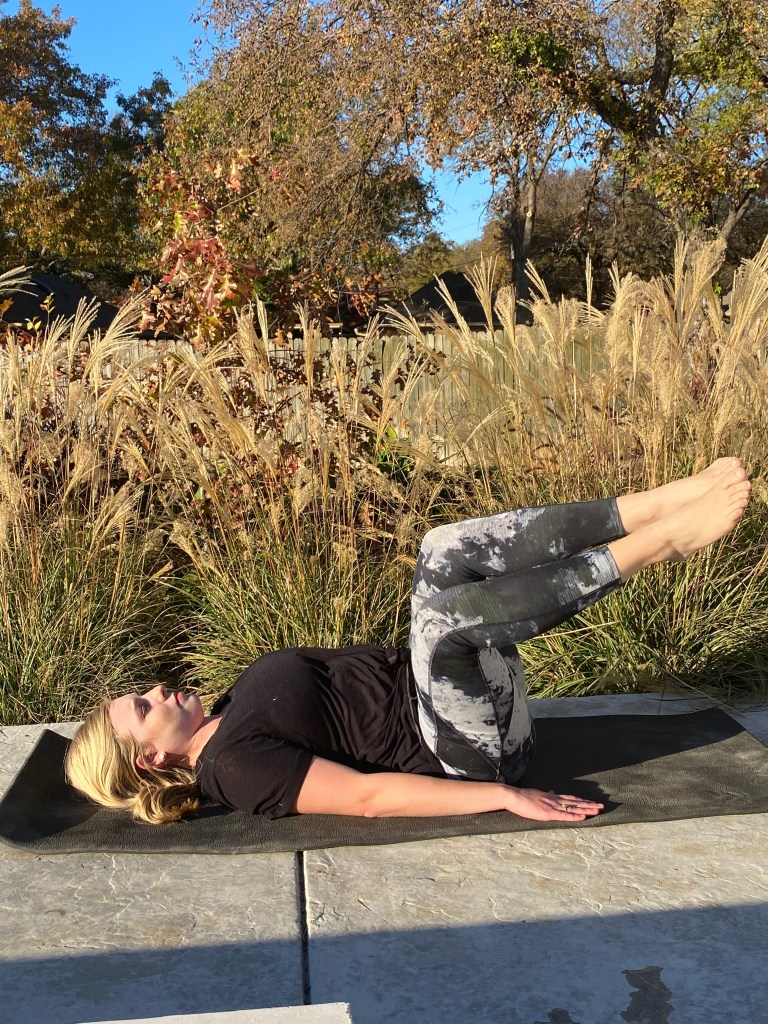
  • Lower trunk rotations: lying on your back → bend your knees, keeping your feet on the floor → slowly lower your legs to one side then the other (to make this more challenging, raise your legs up so your feet are off the floor and knees are bent at 90 degrees)

Start with 2 sets of 8 reps and progress up to 3 sets of 12 reps over time. Make sure to avoid breath holding, gently breathe in and out through the entire exercise.

You can start the diaphragmatic breathing right away! It is super great for the nervous system, to get blood flow to the pelvic area, and to prevent muscle spasm. Wait until about 3-4 weeks postpartum if you delivered vaginally and 5-6 weeks if you delivered via c-section to do the other lengthening exercises, unless you have clearance from your doctor. For the strengthening exercises, wait to begin until 6 weeks postpartum if you delivered vaginally and 8-10 weeks if you delivered via c-section. 

These exercises are also a great place to start even if you had a baby 10 years ago but want to get back into exercise or experience any of the symptoms described above. 

Need help learning how to progress through these exercises? Find a pelvic floor physical therapist! It is our job to identify dysfunctions and guide you in the progression to optimal function. 

As always, make sure to message with questions. And check out my instagram @drallisonballpt to find more exercise tips!

Onward & Upward, 

Allison