My Fertility Journey

At the time of My Wellness Journey post, my ultimate goal at that time was to conceive. We reached the point that I was able to have regular cycles, and I was tediously tracking my cervical mucus throughout my cycle using the Creighton Model with the help of my amazing Creighton Model practitioner, Stephanie Gavin.1 For me, achieving regular cycles required the help of a medication that stimulates ovulation called letrozole in addition to bioidentical progesterone and estradiol – all of which I took during very specific days of my cycle. (All of these should only be prescribed by a licensed physician).

What does “regular cycle” really mean? When I say cycle, I am referring to the first day of my period through the day before my next period begins. By “regular”, I am meaning cycles that are regularly lasting 28 to 40 days with confirmed ovulation (typically around day 14-25). Most period tracking apps will automatically assume that you have a 28 day cycle and ovulate on day 14. Although this is not an uncommon pattern, many women whose cycles are still completely normal ovulate later in their cycle, which then causes their cycle as a whole to be longer.2

Once on my medication regime, my cycles were typically about 33-35 days long with ovulation occurring around day 18-20. I was also taking several supplements as support including a probiotic to encourage good gut function, a prenatal for general vitamin support and to prepare my body for pregnancy, echinacea to promote good immune function, and B6 to improve the quality of my cervical mucus. (Again, these are not medical recommendations, just what I was personally taking under the guidance of my doctor).

One of the many things I learned through this process was the importance of having good quality cervical mucus. Cervical mucus is exactly what it sounds like – mucus developed by the cervix, which is located just below the uterus. You have cervical mucus present for most of your cycle, but there are only a few days that it is fertile. When the mucus is fertile, it is clear, stretchy, and feels slippery.

Okay, nerd out with me for a second. The coolest part about cervical mucus is when it is fertile, it matches the consistency of a male’s ejaculatory fluid, so that the sperm can seamlessly transfer from the male’s ejaculate to the female’s cervical mucus into the uterus to fertilize an egg if successful ovulation has occurred. Now, if that is not an example of God’s design I don’t know what is! 

If you can’t tell, I get a little pumped to talk about fertility and all the things surrounding it. It makes me wonder why we do not teach the basics of fertility and menstrual cycles in school, since it literally occurs in every female body consistently from puberty until menopause. But that is a whole other soap box for another day. 

Moving right along, after some dosage adjustments in the medications I was taking, we finally had our first positive pregnancy test at the end of January 2021! It was the most amazing day, and I will never forget the flood of emotions that came when I saw those two lines. It took us almost a full year of tedious cycle tracking, bloodwork, supplement management, diet modifications, and medical intervention to conceive our sweet boy. And the timing was perfect, even though I struggled to see that in the moment. 

I know for many people, the journey to having a child is much longer, and for others much shorter, but I lay out the details of my story in hopes that I can encourage other women and couples who are in the midst of their own fertility journeys to not lose hope. I hope to inspire women to advocate for themselves, do their own research, and seek out medical professionals that will come alongside you in this journey. 

Onward & Upward, 

Allison

P.S. Here are a few resources that were critical in this process for me, and I highly recommend them for ALL women, whether you are trying to conceive or not!

  • Creighton Model Website: https://creightonmodel.com/
  • Book: Taking Charge of Your Fertility by Toni Weschler, MPH
  • Book: Beyond the Pill by Dr. Jolene Brighton 

References: 

  1. Creighton Model, 16 Dec. 2020, https://creightonmodel.com/.
  2. Weschler, Toni. Taking Charge of Your Fertility: The Definitive Guide to Natural Birth Control, Pregnancy Achievement, and Reproductive Health ; 20th Anniversary Edition. William Morrow, an Imprint of HarperCollinsPublishers, 2015. 
Are My Abs Torn?? The Truth About Diastasis Rectus Abdominis

Diastasis rectus abdominis (or DRA) is a condition that occurs when the tissue between the “6-pack” muscle (the rectus abdominis) thins out due to an increase in abdominal pressure. This increase in pressure can be from a pregnancy, poor breathing strategies, heavy weight lifting with poor strategies, or increased visceral or abdominal fat. 

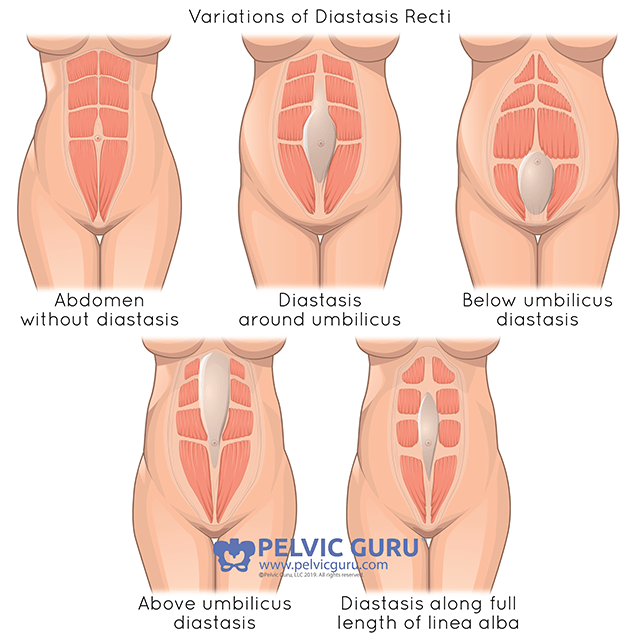
This separation can look different person to person – for some it may just be at the belly button, others it may be above or below the belly button, and others it may be the entire length of the abdominal wall. People will also experience different widths and depths of their diastasis. 

Permission to use by Pelvic Guru, LLC

The great news is that DRA can be treated, and you can get back to doing what you love with the proper guidance! 

There are A LOT of myths surrounding diastasis, which leads to unnecessary hopelessness. So let’s bust some of those myths, shall we?? 

Myth #1: My abdominal tissue is torn! 

Nope! With a diastasis, the tissue is not torn, just stretched out and thinned.The protrusion or depression that some people will see with a diastasis is due to improper activation of the abdominal muscles and poor support of the abdominal wall – not because there has been a tear in the muscle or any of the surround tissues! 

This is GREAT news because abdominal muscle can be retrained and strengthened, which is why this condition is treatable!

Myth #2: I need to get the width of my diastasis back to normal. 

Actually, you don’t! Research has shown that the width of the diastasis is not indicative of how the abdominal muscles are functioning – crazy right?? However, the DEPTH of the diastasis does provide indicators of function. 

Studies have shown that if a diastasis is shallow, the abdominal muscles are supporting the abdominal wall appropriately, even if there are still several finger widths of separation between the rectus abdominis muscle. 

If the diastasis has significant depth to it, those deep core muscles (this includes your pelvic floor!) are not supporting your body appropriately and may be weak, tight, and/or poorly coordinated. 

Most people do want the width of their diastasis to improve, and for some people it will, others it will not. BUT, what is important to note is that even if the width stays the same, as long as the diastasis is shallow and the depth of it is addressed, the muscles are working appropriately to support your abdominal wall and trunk. 

Myth #3: I should avoid all core exercises because it will make my diastasis worse. 

NO, NO, and NO. 

The key is not avoiding the exercise; it is making sure your body is supporting you appropriately. 

This means making sure your deep core muscles are activating well and that you are using good breathing and pressure management strategies so that your abdominal wall is fully supported. 

Some basic principles to start with when adding core exercises back into your exercise regime are: 

  • Avoid breath holding. For most people, exhaling on exertion is easiest. 
  • Perform exercises with slow, controlled movement. Do not rush. 
  • If you start feeling symptomatic, stop. This is your body telling you that this exercise may be too much too soon. You’ll get there, just give your body time where it needs it! 
  • Keep your core engaged to protect your spine and stabilize your pelvis 

This is why seeing a pelvic floor PT is so important when returning to exercise postpartum or with a diastasis in general. We can assess your diastasis, determine how well your abdominal wall is being supported, and provide you with the strategies you need to safely exercise! 

Onward & Upward, 

Allison

Restore Your Pelvic Floor

Whether you had your baby yesterday or 40 years ago, you are postpartum! And it is never too late to improve your pelvic floor muscle function. 

To many people’s surprise, restoring your pelvic floor postpartum does not revolve around kegals! Pelvic floor strengthening is important, but it is far from the only component, not to mention strengthening the pelvic floor involves much more than kegals anyways. 

After a baby is born vaginally, it takes about 6 weeks for your vaginal tissue to heal. It is important to limit your activity to only necessary activities during your first 2-3 weeks postpartum. Around week 3-4, depending on how you are feeling, you may be able to start back to gentle, low impact exercise like walking or yoga. It is important to ease yourself back into exercise, pushing your body past its limits can cause more harm than good. 

If you had a c-section, the abdominal scar will take a little longer to heal. It is best to limit activity until 6-8 weeks postpartum to allow for full scar tissue development and healing. Then, gradually increase your exercise – starting with low intensity and building from there.

There are certain symptoms you want to watch for when returning to exercise postpartum including:

  • Pelvic, vaginal, or abdominal pain
  • Urinary incontinence 
  • Heaviness/pressure in the vaginal area 

If you experience these symptoms, you may be doing too much too soon, and you would definitely benefit from seeing a pelvic floor physical therapist to address the root cause of the dysfunction and help you recover. 

The progression to returning to exercise and activities of daily living will vary from person to person. The most important thing is to listen to your body and what it is ready for. 

We want to restore the function of the muscles and connective tissue found in the entire trunk – because they are all affected by pregnancy and delivery! Like I mentioned earlier, we don’t want to only strengthen – muscles need to lengthen just as much as they need to contract, that’s how we have dynamic movement! Note that lengthening does not mean weak; it just means that the tissues can move through their full range of motion efficiently. 

A few of my favorite muscle lengthening/mobility exercises are: 

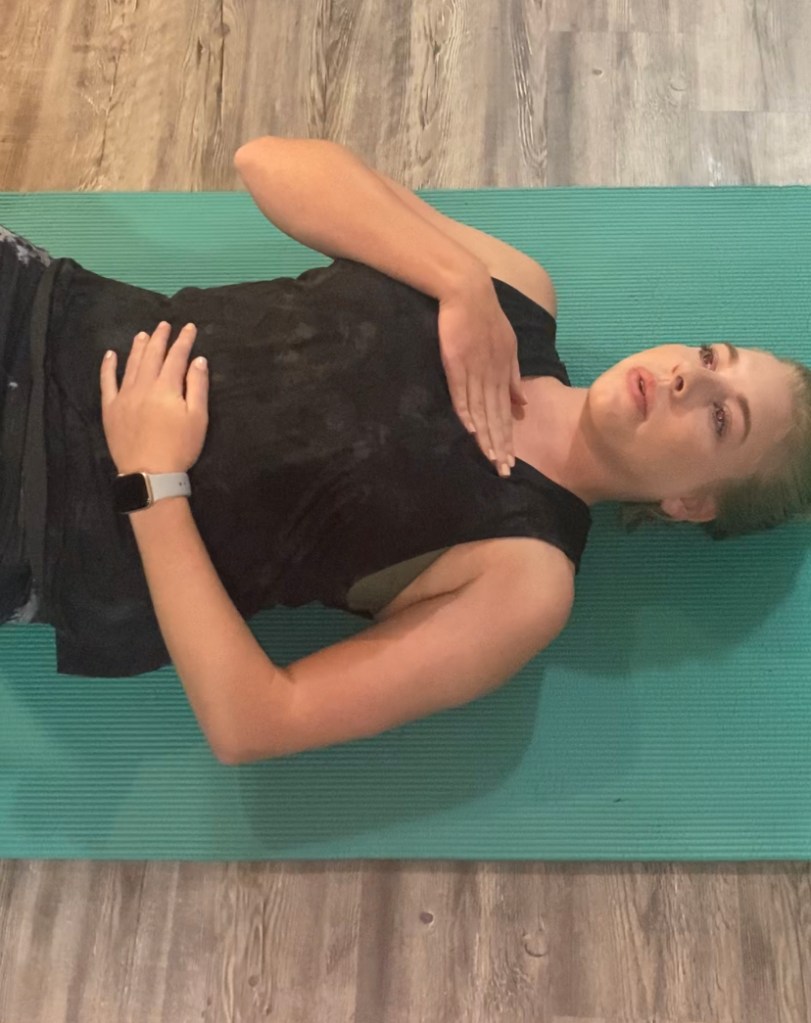
  • Diaphragmatic breathing: sitting or lying down → place one hand on your chest and the other on your stomach → inhale and allow only the hand on your belly to rise, keep the one on your chest still → exhale and let your abdomen relax
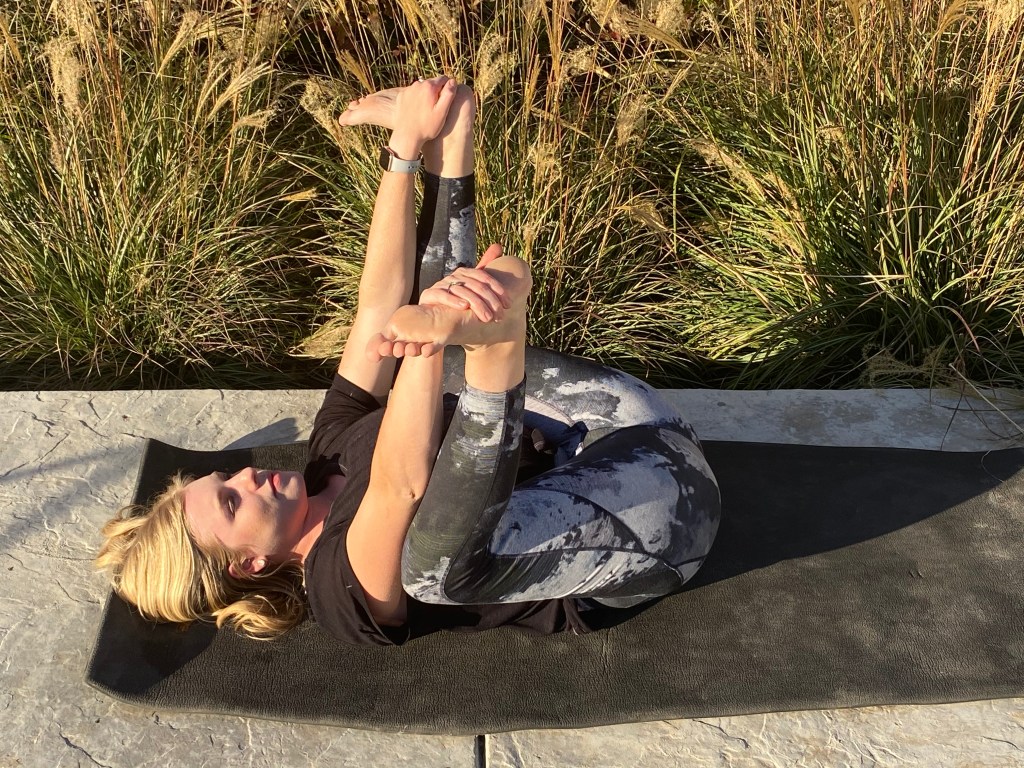
  • Happy baby pose: lie down on your back → bend your knees towards your chest → grab the bottoms of your feet with each hand → hold this position while breathing slowly and deeply (modify with 1 leg at a time if needed!) 
  • Cat/cow: start on all fours → inhale and round out your spine from your head to your tailbone → exhale and allow your abdomen to drop and head to look up

Do these exercises 2-3x/day for 1 minute each. 

Now of course, we need to strengthen our bodies too! So here are three gentle strengthening exercises that will target your core and pelvic floor: 

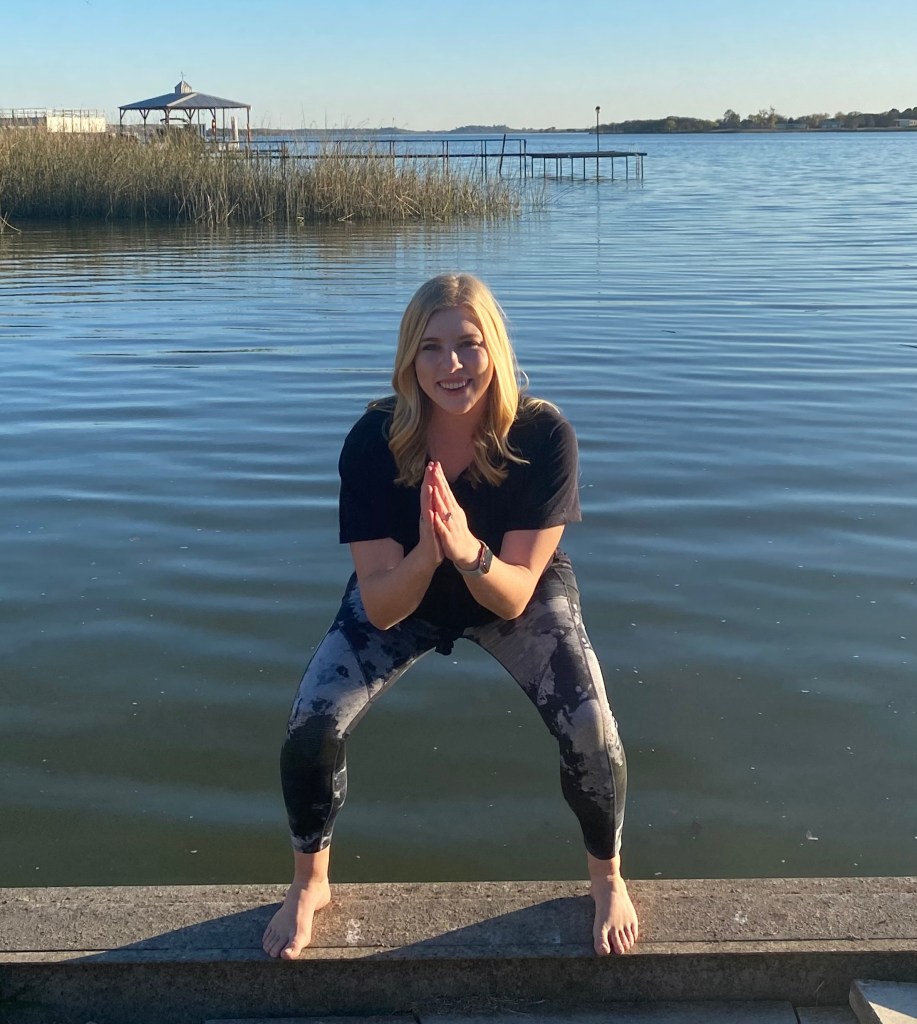
  • Squats: start standing with feet just past hip width apart → push your buttock back and squat to about 60-90 degrees (not deep) → return to stand 
  • Bird dog: start on all fours → gently draw your belly button to your spine → raise one arm and the opposite leg, keeping your hips level → return to starting position → repeat on the opposite sides 
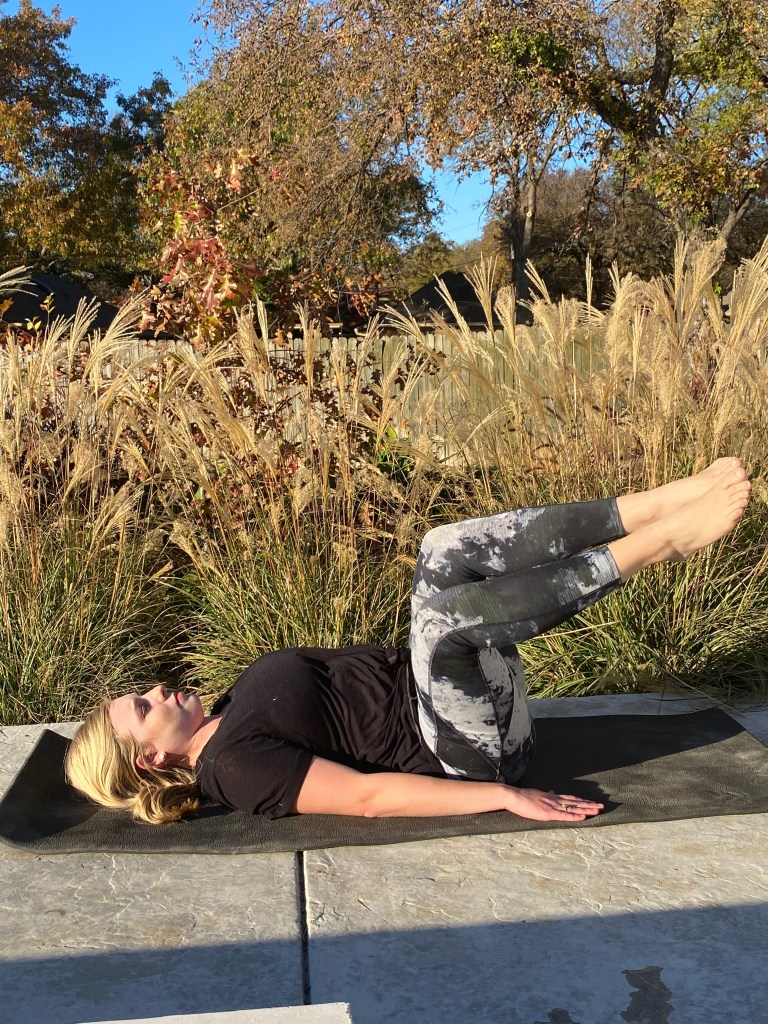
  • Lower trunk rotations: lying on your back → bend your knees, keeping your feet on the floor → slowly lower your legs to one side then the other (to make this more challenging, raise your legs up so your feet are off the floor and knees are bent at 90 degrees)

Start with 2 sets of 8 reps and progress up to 3 sets of 12 reps over time. Make sure to avoid breath holding, gently breathe in and out through the entire exercise.

You can start the diaphragmatic breathing right away! It is super great for the nervous system, to get blood flow to the pelvic area, and to prevent muscle spasm. Wait until about 3-4 weeks postpartum if you delivered vaginally and 5-6 weeks if you delivered via c-section to do the other lengthening exercises, unless you have clearance from your doctor. For the strengthening exercises, wait to begin until 6 weeks postpartum if you delivered vaginally and 8-10 weeks if you delivered via c-section. 

These exercises are also a great place to start even if you had a baby 10 years ago but want to get back into exercise or experience any of the symptoms described above. 

Need help learning how to progress through these exercises? Find a pelvic floor physical therapist! It is our job to identify dysfunctions and guide you in the progression to optimal function. 

As always, make sure to message with questions. And check out my instagram @drallisonballpt to find more exercise tips!

Onward & Upward, 

Allison

What’s Happening “Down There”: Pregnancy and Delivery Edition

Understanding what is happening to our bodies during pregnancy and postpartum can help explain so many of the problems women encounter during these phases of life! However, we tend to focus on mama during pregnancy and focus on baby after delivery – and don’t get me wrong, of course the baby needs a ton of attention! But YOU need attention too, your body goes through a lot, and you need to HEAL so that you can give your baby all the attention he/she needs. 

Let’s back up a little bit and start with what happens to the pelvic floor during pregnancy, labor, and delivery. During pregnancy, the body endures SO many changes, both hormonal and physical. These changes are vital for the growth and development of your baby. 

Several hormones contribute to the increase in laxity of the ligaments surrounding the pelvis. This allows the joints of the pelvis to open and “loosen” so that there is room for the baby to grow and to be delivered. In response, the muscles have an increased responsibility to stabilize the joints, which contributes to the pain in the front and back of the pelvis many women experience. 

There is also constant and increasing pressure placed on the pelvic floor from the baby. This makes those muscles have to work pretty hard, and if they aren’t functioning optimally to begin with, you may see symptoms like urinary incontinence or pain with intercourse during pregnancy. 

This is why it DOES NOT MATTER whether you deliver via cesarean or vaginally – all of this happens no matter how your delivery goes. So, your pelvic floor is impacted either way. 

So on to delivery. If you have a vaginal delivery, the cervix dilates and the muscles will stretch to the distance needed to allow your baby out of the vaginal canal. We have awesome hormones that help us out here! In many cases, women may have mild tearing at the perineum – the area between the vagina and the rectum – due to this high intensity stretch. Some women have more severe cases of tearing than others, and some women may have an episiotomy performed, where the tissue is cut by the physician or midwife instead of naturally tearing. Episiotomies have become less common as it has not been shown to reduce the severity of a tear but still may be required in certain scenarios.

So, what exactly is tearing? Part of the muscles and connective tissue of your pelvic floor. Depending on how severe the tear was and where it occurred will determine the need for stitches. With any tear, especially one that requires intervention like stitches, there will be scar tissue. Scar tissue is a good part of the healing process, but sometimes it can cause some problems like limiting the mobility of our muscles and connective tissues. 

Where else do we see scar tissue? C-sections. A c-section is a major abdominal surgery! The abdominal muscles are very much so related to our pelvic floor muscle function, and while they are healing, the pelvic floor then takes on a lot of the responsibility of our core. 

If the muscles and surrounding tissues cannot move well due to scar tissue, our function is impacted (whether at the abdomen or at the pelvic floor). Muscles may spasm as a protective mechanism or become weak overtime due to the inability to move appropriately. This is where we start to see symptoms of pelvic pain, incontinence, abdominal pain, pelvic organ prolapse, or other urinary or bowel dysfunction. 

This information can all sound a little overwhelming and scary at times. However, it is important to understand what your body endures, so you can be proactive in the healing process – knowledge is power right?? The great thing is that these conditions are treatable – even if you had your last baby over 20 years ago! 

I wanted to lay out the foundation today, but in my next post, we’ll talk about restoring your pelvic floor postpartum and how to promote optimal healing. And always make sure to comment or send a message through the contact page with any questions! 

Onward & Upward, 

Allison

Common Is NOT Normal

“I just thought it was normal.” This is a phrase I hear from patients all the time. They are told by their friends, family members, or even their healthcare providers that the symptoms they are enduring are just a part of life – just deal with it. 

New flash: 

  • Peeing yourself with (insert any activity here) after having a baby → common not normal 
  • Having pain with sex for months after having a baby → common not normal 
  • Struggling with constipation or incontinence after menopause → common not normal 
  • Having pain with sex when you have never had a baby → common not normal 

There are many more examples but these are just a few of the most common ones I hear. It is SO important to recognize that just because a lot of people struggle with the same condition it does not mean you have to live with it. In fact, all of those conditions described above can be managed with lifestyle modifications and physical therapy in most cases. 

I always tell my patients – YOU know your body best. If something doesn’t feel right, it probably isn’t, it is worth investigating, and it is NOT. IN. YOUR. HEAD. People have a tendency to feel or be labeled as “crazy” for worrying about something that does not feel normal, especially if medical testing shows that everything is “normal”. Here’s the deal – tight and weak muscles, restricted connective tissue, and chronic inflammation typically do not show up on imaging or blood work. They show up as symptoms like incontinence, pain, and gut issues. 

So when and if you are told, “oh, well that’s just a part of being a woman/having a baby/getting old”, I challenge you to NOT accept that as an answer. Find providers who will LISTEN to you and will search WITH you. We are out there – I promise! 

Onward & Upward, 

Allison

So Wait… What Exactly Do You Do?

Whenever someone learns that I am a pelvic floor physical therapist, the question inevitably comes up, typically with some hesitation but intense curiosity – “So wait, what exactly do you do?” Or from my patients, I almost always get the question at some point – “So how exactly did you end up doing this type of physical therapy?” I love and welcome these questions!

Most people don’t even know what their pelvic floor is, never mind knowing you can get physical therapy for it! I always describe it like a knee injury. If you had pain, an injury, or surgery at your knee, you would expect to have physical therapy to recover from that. For some reason, our culture does not seem to apply the same to the pelvic floor – Europe on the other hand seems to have this figured out. 

Pelvic floor physical therapists treat a variety of conditions related to the pelvis including but not limited to urinary incontinence, pregnancy related pain, vaginismus, diastasis recti, constipation, pain with intercourse, low back/SI joint pain, and fecal incontinence. We can also help prepare the body for pregnancy, labor, and delivery in addition to help with the healing process postpartum. This is done through a variety of techniques such as manual therapy, strength training, retraining the nervous system, relaxation and stress management strategies, lifestyle modifications, and functional movement training. 

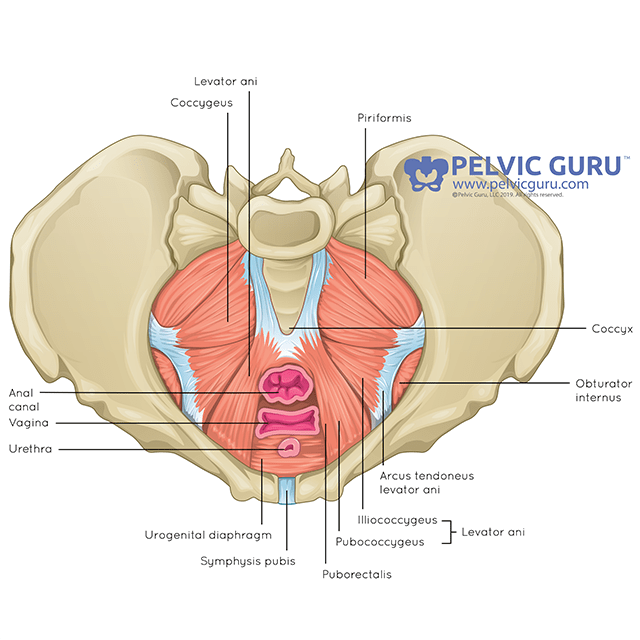
The pelvis is FILLED with muscles, connective tissue, nerves, and blood vessels – just like the knee (see image below). So, if there is damage to this area, say from carrying a baby for 9 months then pushing it out of your vagina or having a cesarean section (hello, tissue damage!), why would we not expect to rehab and heal the muscles, nerves, and connective tissue of that area? And this is just one example, pelvic floor rehab is not limited to pregnant and postpartum women in the slightest! I have seen patients ranging from the age of 7 to over 90 years old with a variety of different diagnoses, and the treatment plan for each patient varies just as much.  

Permission to use by Pelvic Guru, LLC

One reason I landed in this area of physical therapy is because it is very specific and very needed, but few people know about it. I wanted to be able to help those who did not know help existed for their problem, while also being a part of advocating for this area of physical therapy to become part of the norm. To me, the vagina and the pelvis are not “weird” – society and culture has created that stigma. It is NORMAL to pee, poop, have a period, and have sex, and your vulva, your vagina, and your rectum are simply ANATOMY – it’s only awkward if you make it awkward! I found that I could talk about these subjects in a way that seemed to normalize them for most people and could allow for a safe space to talk about vulnerable topics.  

So therein lies another reason to start this blog! A place to discuss and learn about the pelvic floor and all of the body systems related to it – how they should work, what can go wrong, and how almost any pelvic dysfunction can be treated and managed. My goal is to guide others as much as I can along the way. 

Onward & Upward, 

Allison

My Wellness Journey

My path to wellness began when I was a teenager. I started my period at the age of 14 – later than most of my peers, but not uncommon for competitive gymnasts. My cycles were irregular – I would have a period once every few months. I was told by my pediatrician that sometimes it can take a little while for the body to get in sync, so the plan was to watch and wait. Fast forward to 4 years later, nothing had changed. I never knew when my periods were coming, and knowing what I know now, I was having significant PMS (premenstrual syndrome) symptoms – bloating, mood swings, and cramping to name a few. I was then referred to an OB/GYN who ran some bloodwork and determined that I had PCOS, Polycystic Ovarian Syndrome. 

PCOS is a very common condition, in fact up to 1 in 15 women battle this condition. There are many signs and symptoms of PCOS including irregular periods, series of small cysts on one or both ovaries, abnormal LH:FSH ratio (hormone that regulates your cycle), weight gain, acne, male-pattern hair growth, lower tone of voice, and insulin resistance. My primary symptoms are the first 3 listed. PCOS is associated with the development of type 2 diabetes, obesity, thyroid disorders, liver disease, and certain cancers. Needless to say, it can be a very scary diagnosis at the age of 18 – especially when I didn’t know how to decipher Dr. Google’s information. 

My OB/GYN told me that the birth control pill would regulate my cycles and may help improve my PCOS symptoms long-term. So, I was put on the pill at the age of 18 – it took a couple tries, but we did find one that regulated my cycle. The problem was the pill was a band-aid and not a solution. 

8 years later, my husband and I made the decision for me to get off the pill. I was hopeful – maybe now that I have been on the pill for so long, my body will just keep regulating my cycles on its own. I was very wrong. Coming off the pill, my periods went right back to being irregular and my cramps were more painful than I remembered. I knew right away, the PCOS was not cured by the pill, much to my dismay. Thankfully, I quickly found an incredible provider (s/o to Dr. Sally Kurz with WholeLife Authentic Care!) who did not dismiss my symptoms and worked to find the root cause to my problems right away. We did LOTS of bloodwork and an ultrasound, which confirmed my PCOS and also uncovered a new diagnosis – Hashimoto’s Thyroiditis. 

Hashimoto’s Thyroiditis is an autoimmune disease of the thyroid. Basically, my body interprets my thyroid gland tissue as foreign – even though it’s not! This then results in the activation of my immune system, which launches an attack on my thyroid. This condition is commonly seen in women with PCOS and is one of the most common thyroid disorders. 

The bloodwork also revealed a lot of imbalances – high testosterone levels, low estrogen, low progesterone, and high DHEA (indicating high stress hormones). Essentially, my hormones were all out of balance. We started implementing lifestyle changes and some low dose medications to address these problems right away – it took about 6 months, but I now have REGULAR cycles, with no birth control and minimal medication use. 

Long story short, if I had known what I do now, I would not have chosen birth control to “treat” my PCOS. I do not blame my doctor – what she did was the standard of care. We have learned A LOT since I was first diagnosed, and in my opinion, what is most important is for patients to be informed of ALL of their options, so each patient can make their own informed decision regarding the course of treatment. 

My hope is that I can help women advocate for themselves. Do the research, ask the questions, search for the resources. And most of all do NOT give up. There are options, and there are wonderful providers who can help you recover. 

My journey is only beginning; there is still so much healing to be done! And although it feels scary, and vulnerable at times, I am excited to share my journey with you. 

Onward & Upward, 

Allison